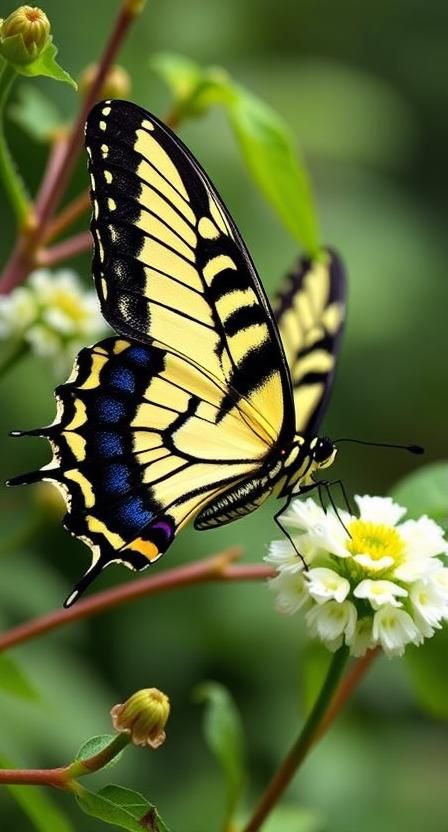
Behind every native plant lies an evolutionary history spanning thousands of years, woven from co-evolutions with the insects, birds and fungi of its territory. Planting native is much more than gardening differently — it's actively participating in the restoration of life, from your garden, terrace, or even your balcony.
What exactly is a native plant?
A plant is called native — or indigenous — when it has been naturally present in a given territory since before major human disturbances, without having been introduced intentionally or accidentally. In Belgium, we distinguish native plants from naturalised plants (introduced but integrated for a long time) and invasive exotic species (recently introduced and potentially harmful).
This distinction is fundamental: a native plant has co-evolved with local wildlife for millennia. It is literally coded in the genome of the insects, birds and fungi of its territory, which depend on it to feed, reproduce or find refuge.
📍 In practice: To find out if a plant is native to your area, consult the IFBL website (Floristic Inventory of Belgium and Luxembourg) or the Flora app from Inbo. These resources list species naturally present in each region of the country.
Exceptional support for biodiversity
This is the most powerful argument for native plants: their impact on local wildlife is incomparable to that of exotic ornamental plants, however beautiful they may be. Research by biologist Douglas Tallamy in the United States has shown striking results, widely confirmed in Europe.
- ×35 more caterpillar species on a native oak than on an equivalent exotic tree
- 96% of terrestrial birds feed their chicks almost exclusively on phytophagous insects
- +70% more pollinators observed in predominantly native gardens
The reason is simple: herbivorous insects are often specialised. The Swallowtail can only reproduce on plants of the Apiaceae family (wild carrot, fennel, dill). The Black-veined White caterpillar only survives on cuckooflower or nasturtium. Without these native host plants, these species disappear — and with them, the predators that depend on them.
Less water, less maintenance, zero treatment
The practical advantage of native plants is their perfect adaptation to local conditions. They evolved under the same climate as you, in the same soil types, with the same cycles of rain and drought. Result: once well established (usually after one to two seasons), they need very few interventions.
- Resistance to summer drought: their deep root systems allow them to seek water at depth.
- Cold tolerance: perfectly hardy, they don't need winter protection.
- Resistance to diseases and pests: co-evolved with local pathogens, they have effective natural defences.
- No fertiliser needed: adapted to often poor local soils, they thrive in them.
"A native plant garden doesn't require less love — it requires a different love: that of observation rather than intervention."
Some essential natives for Belgium
There's no shortage of choice: the Belgian native flora includes several hundred species, many of which are of sober and remarkable beauty. Here are some stars to integrate this season.
- Yarrow: White or pink flowers from July to October. Attracts more than 100 insect species. Tolerates drought.
- Field scabious: Mauve flower essential for bumblebees and butterflies. Flowers June to September in chalky soil.
- Meadowsweet: Enchanting fragrance, cream flowers in plumes. Ideal in wet areas. Feeds many insects.
- Viper's bugloss: Spectacular blue-violet flowers. Host plant for wild bees. Tolerates dry, poor soils.
- Blackthorn: Thorny shrub, refuge for nesting birds. White flowers from March, fruits (sloes) in autumn.
- Climbing ivy: Flowers in October — vital for the last active pollinators. Fruits for blackbirds and thrushes in winter.
The role of native plants in the soil
We often think of native plants for what happens above ground. But their underground impact is equally remarkable. Their deep and diverse root systems structure the soil, prevent erosion and promote rainwater infiltration.
These roots also maintain specific mycorrhizal relationships with local fungi — associations that allow extracting minerals from the soil with an efficiency that no chemical fertiliser can match. Disrupting these links by planting exotic species unbalances an entire invisible but fundamental network.
💡 Did you know? A native meadow sequesters on average two to three times more carbon than a conventional lawn, thanks to the depth and biomass of its root systems.
Where to get native plants?
The practical challenge for the motivated gardener is often to find authentically native plants, and not horticultural cultivars which, although derived from native species, have been selected for decorative characteristics (double flowers, modified colours) that make them less useful for wildlife.
- Specialised nurseries: look for those that specify "wild species" or "local origin" (local provenance = genome adapted to your region).
- Gardener exchanges: seeds and cuttings from local gardens are ideal. Local naturalistic gardening networks organise regular exchanges.
- Responsible collection: legal in small quantities on certain sites, but always with caution and knowledge of local regulations.
- Naturalist associations: Natagora in Wallonia, Natuur & Bos in Flanders sometimes organise distributions of native plants from local seeds.
Gardening native is gardening the future
Every native plant you install in your garden is a concrete act of ecological restoration. It's not a trend or a romantic ideal — it's a practical and effective response to the biodiversity crisis, within reach of hand and spade.
You don't need to redo everything in one season. Start with a corner of the garden, a hedge, a border. Observe what arrives — the butterflies, the bees, the birds. Let yourself be convinced by nature itself, which will surely come to thank you much faster than you imagine.
The native garden is patient. Sow today, marvel tomorrow. 🌿